Fight or Flight: Understanding Your Nervous System to Ease Anxiety
You know that feeling when you're lying in bed at 2 AM, you're exhausted but you can't sleep? Your mind racing through tomorrow's to-do list? Or when you snap at your partner over something small, then immediately feel guilty because you know they didn't deserve it? Maybe it's that knot in your stomach that shows up every Sunday evening, even though you actually like your job.
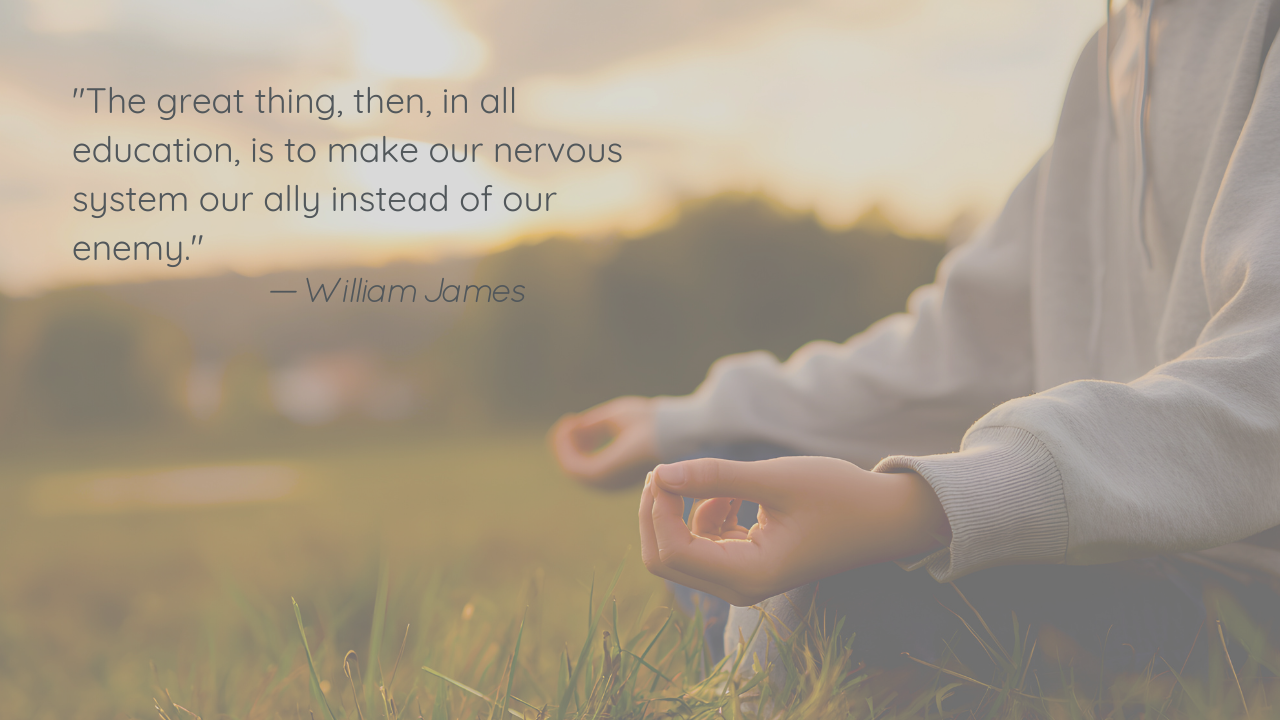
These aren't character flaws or signs that you're "not handling life well enough." They're signals from your nervous system—and it's trying to tell you something important.
The Two Sides of Your Internal Alarm System
Think of your nervous system like a smoke detector paired with a sprinkler system. One sounds the alarm when there's danger, and the other comes in to calm everything down and clean up. In medical terms, these are called the sympathetic and parasympathetic nervous systems.
Your Alarm (Sympathetic System) goes off when you need to respond to danger fast. It's what made your ancestors run from predators, and it's what gives you that surge of adrenaline when you get startled. Your heart pounds, your pupils dilate, your muscles tense up, and suddenly you're flooded with energy. This system is brilliant for emergencies.
The problem? Your body can't tell the difference between a charging bear and a passive-aggressive email from your boss. It treats both like threats.
Your Off-Switch (Parasympathetic System) is designed to bring you back down after the danger passes. This is when your heart rate slows, your breathing deepens, your digestion kicks back in, and your body finally gets the message: "Okay, we're safe now. Time to rest and repair."
When these two systems work together in balance, you're resilient. You can handle stress without getting overwhelmed, and you can relax without feeling guilty about it.
But if we've been battling chronic stress in the form of anxiety for years, our nervous system isn't calibrated correctly.
When Your Alarm Won't Stop Blaring
Imagine you're in a house where the smoke detector keeps going off even though there's no fire. That's what chronic stress does to your nervous system.
Maybe you wake up to a dozen notifications before you even get out of bed. You rush through breakfast while mentally rehearsing a difficult conversation. You sit in traffic, muscles clenched, already behind schedule. At work, you toggle between five browser tabs, each one demanding something urgent. You finally get home and collapse on the couch, scrolling through your phone because you're too wired to actually relax, even though you're exhausted.
Sound familiar?
This is your sympathetic nervous system running the show. And when it does, you might notice:
- Your jaw is constantly clenched, causing tension headaches
- You can't remember the last time you took a full, deep breath
- You're irritable over things that normally wouldn't bother you
- Sleep feels impossible, even when you're bone-tired
- Your stomach is always upset, no matter what you eat
- You feel anxious even when nothing specific is wrong
Your body isn't broken. It's just stuck in alarm mode, waiting for a threat to pass that never actually does.
The Real Cost of a System That Won't Rest
Living with your internal alarm constantly blaring isn't just uncomfortable—it's literally exhausting your body's resources. Think of it like trying to sleep in a room where the fire alarm keeps randomly going off. Eventually, you stop being able to rest at all.
Chronic activation of your stress response weakens your immune system (which is why you always seem to get sick right after a stressful period ends). It interferes with digestion (your body literally shuts down "non-essential" functions like breaking down food when it thinks you're in danger). It makes it harder to think clearly, sleep deeply, or connect meaningfully with the people you love.
You might even start to forget what calm even feels like.
How to Turn Off the Alarm
Your nervous system has learned to expect stressors and is constantly looking for them, but the good news is that you can retrain your nervous system. You can teach your body that it's safe to rest, even in the middle of a busy life. Here's how:
Breath is our First and Best Tool
When you're stressed, your breathing becomes quick and shallow, which sends a signal to your brain: "Danger! Stay alert!" But by simply changing how you're breathing you can reverse this.
Try this right now: Place one hand on your chest and one on your belly. Breathe in slowly through your nose for a count of four, letting your belly expand, not just your chest. Then exhale slowly through your mouth for a count of six.
Do this for just two minutes, and you'll feel your heart rate slow down. That's your parasympathetic system kicking in. You just told your body, "We're okay. It's safe here."
Find Your Way Back to Your Body
Anxiety lives in the future—in all the things that might go wrong. Your body lives right here, right now. When you feel that familiar spiral starting, ground yourself.
You can ground yourself in the present moment using your senses and the 5-4-3-2-1 technique: Name five things you can see, four things you can touch, three things you can hear, two things you can smell, and one thing you can taste. It sounds simple, but it pulls you out of your racing thoughts and back into the present moment, where things are usually actually okay. Exploring your senses reconnects your mind to your body, bringing you out of anxiety and into safety.
Move in Ways That Feel Good
You don't need to run a marathon or do an intense HIIT workout, what you really need is gentle, mindful movement to reconnect to your physical body.
Yoga is particularly powerful because it combines breath, awareness, and slow, intentional movement—all of which signal safety to your nervous system. But even a slow walk around the block, stretching on your living room floor, or dancing to your favorite song in the kitchen can help reset your system.
Notice your Thoughts Without Judgment
Meditation isn't about emptying your mind or having no thoughts at all. It's about noticing what's happening, what you're experiencing—the thoughts, the sensations, the emotions—without immediately reacting to them.
Over time, this builds resilience. You learn to sit in the discomfort of difficult emotions or uncertainty and not have to fix anything or change anything. By just allowing discomfort, your brain literally becomes less reactive to stressors and the things that used to send you into a tailspin start to feel more manageable.
What Changes When You Find Balance
When you consistently practice activating your parasympathetic system, something shifts. Not overnight, but gradually, like a volume dial slowly turning down.
You might notice that you sleep more deeply. That you can disagree with someone without your heart pounding out of your chest. That you can sit through dinner without checking your phone. That the knot in your stomach loosens. That you laugh more easily and feel more like yourself.
You're not becoming a different person—you're just finally giving your nervous system permission to rest.
You Don't Have to Figure This Out Alone
If you've been living in survival mode for so long that you can't remember what calm feels like, you're not alone. And you don't have to navigate this journey by yourself.
Through body-based practices and supportive guidance, you can learn to regulate your nervous system, reduce anxiety, and reclaim the sense of peace that's been buried under layers of stress.
Healing doesn't happen all at once. It happens in small moments: the first time you take a full breath in weeks, the morning you wake up without immediately feeling dread, the conversation where you stay present instead of preparing your defense.
I’m a yoga therapist, and I help people who feel anxious, overwhelmed, or stuck learn how to work with their nervous system—not against it. Through gentle, body-based practices, I support you in building resilience, restoring a sense of safety, and finding more ease in everyday life.
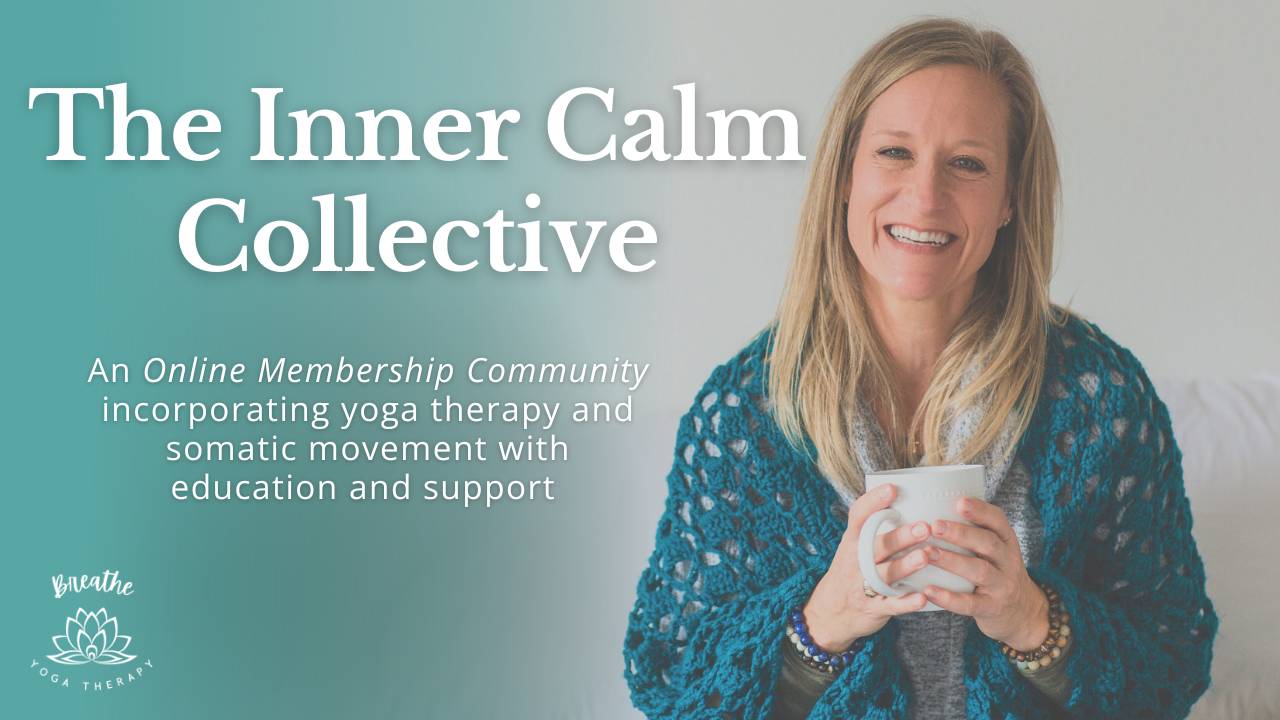
If you’re curious about a more compassionate, body-focused approach to anxiety, I’d like to invite you to join my online community The Inner Calm Collective.
Start with the free Inner Calm Collective membership tier and when you’re ready for more guidance, join the Elevated Membership for live classes, deeper support, and a space where your healing is fully supported. Join for free today!

Join Our Free Online Community!
You don’t have to do this alone. Inner Calm Collective is our online membership community where you’ll get expert tips, tools, and insights on healing anxiety, trauma, and building nervous system resilience.
Get the support and guidance you need to ease stress, calm your nervous system, and feel more at home in your body—every single day. Join now and start feeling the difference today!