When "Good Enough" Never Feels Good Enough: Perfectionism as a Trauma Response

There's a version of perfectionism that looks admirable from the outside, the spotless house, the flawless presentation, the person who seems to have it all figured out. But beneath that polished surface, something more painful is often at work. For many people, perfectionism isn't a personality trait or a productivity strategy. It's a survival response, one that was learned early, often without even realizing it.
To understand perfectionism, we have to go back to the beginning. Attachment wounds form in childhood when our emotional needs aren't consistently met. Maybe a caregiver's love felt conditional, like it was offered freely when we performed well but absent or withdrawn when we didn't. Maybe the environment was unpredictable, and doing everything "right" was one of the few ways we could feel safe and in control. Maybe we learned, explicitly or subtly, that our worth was tied to our achievements.
Children are remarkably adaptive. When a young person senses that love or security depends on their performance, they do what any smart, scared human being would do: they start performing. They work harder, try harder, become more careful. They learn that mistakes aren't just inconvenient, they might be dangerous. Not physically dangerous, necessarily, but emotionally dangerous. A mistake might mean disappointment, withdrawal, criticism, or the terrifying feeling of being "too much" or "not enough."
Perfectionism is born in that space. It's the nervous system's answer to an unsafe emotional environment: if I can just be perfect, I’ll get the love I need, I won't be rejected.
The Anxiety Connection
Here's where perfectionism reveals its true cost: it doesn't actually deliver safety. It promises it, over and over again and then moves the goalposts.
The perfectionist mind operates on a feedback loop of fear. Fear of making mistakes. Fear of being found out. Fear that the last thing you did well was a fluke, and the next thing will expose you for the fraud you secretly suspect you are. This is the brutal interior life of perfectionism, and it is exhausting.
Anxiety thrives in this environment for several reasons.
First, perfectionism keeps the nervous system in a near-constant state of high alert. When your sense of safety depends on flawless execution, every task carries emotional weight it was never meant to carry. A work email becomes a test of your worth. A dinner that didn't turn out right becomes evidence of failure. The nervous system can't distinguish between a burned casserole and a genuine threat, it just knows you've fallen short of the standard that earns you approval.
Second, perfectionism sets an impossible standard. The bar isn't just high; it's designed to stay out of reach. No matter how well something goes, the perfectionist mind can almost always find a flaw, a way it could have been better, a reason to withhold the satisfaction that was supposed to come. This means you're perpetually running toward a finish line that doesn't exist, and anxiety fills the gap between where you are and where you think you need to be.
Third, and this is perhaps the most painful part, perfectionism involves a deep disconnection from the self. When your identity becomes wrapped up in what you produce or how you appear, your actual needs, feelings, and values get pushed to the margins. You stop asking what do I want? and start asking what will keep me safe from criticism? That disconnection creates a quiet, persistent anxiety of its own: the feeling of being a stranger to yourself.
One of the most important things to understand about perfectionism as a trauma response is that it is adaptive, not innate. You were not born needing to be perfect. You learned it. You learned it because, at some point, it helped you navigate something hard.
That reframe matters because it creates space for compassion for the child who needed that strategy, and for the adult who is still running on that old programming. Perfectionism was a form of protection. It just also happened to build a cage.
Recognizing perfectionism as a learned response rather than a character trait is the beginning of being able to change it. It allows you to ask different questions: What was I afraid of back then? What am I still afraid of now? Is that fear still accurate, or am I still responding to an old threat?
Healing from perfectionism isn't about lowering your standards or stopping yourself from caring. It's about uncoupling your worth from your output and learning that safety can come from within, rather than from flawless performance.
This looks like practicing self-compassion when you make a mistake, instead of immediately reaching for self-criticism. It looks like sitting with the discomfort of imperfection long enough to realize you survived it. It looks like connecting to your body so that your nervous system can begin to learn, at a cellular level, that you are safe even when things are messy.
It also looks like doing some honest inner work: visiting the younger version of yourself who first decided that perfect was the only way to be loved, and offering them the reassurance they were looking for all along.
I'm a yoga therapist and I help people break free from the exhausting cycle of perfectionism. Through gentle, nervous system-focused practices, I guide you in softening the grip of "never enough" and learning to trust that safety can come not from flawless execution, but from within yourself.
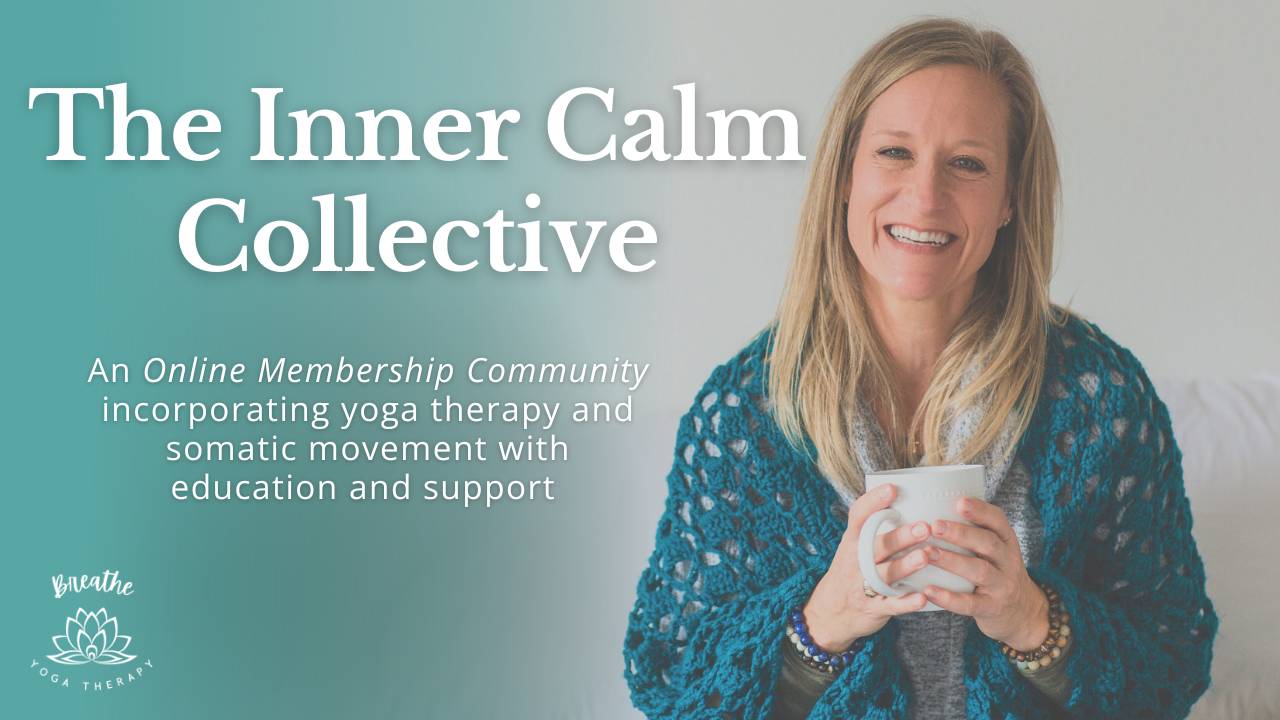
If you're tired of living under the weight of impossible standards and ready to explore what it feels like to be accepted exactly as you are, I'd love to support you. Join my online community, The Inner Calm Collective.
Begin with the free membership tier to explore nervous system tools and practices at your own pace. When you're ready for deeper guidance, the Elevated Membership offers live classes, daily practices, personalized support, and a community where your messy, imperfect, healing journey is honored every step of the way.
You were always enough. The perfectionism was just a story you told yourself to stay safe. And stories, with time and compassion, can be rewritten.
Join Our Free Online Community!
You don’t have to do this alone. Inner Calm Collective is our online membership community where you’ll get expert tips, tools, and insights on healing anxiety, trauma, and building nervous system resilience.
Get the support and guidance you need to ease stress, calm your nervous system, and feel more at home in your body—every single day. Join now and start feeling the difference today!